
Veterans Day Fine Motor Activities for Preschool and Kindergarten
Looking for Veterans Day fine motor activities to add to your November plans? Tracing, cutting, hole punching, and drawing give preschool and kindergarten students different ways to practice using classroom tools. You can keep your center routine familiar while introducing a Veterans Day theme.
My Veterans Day Fine Motor Activities include 20 activities for preschool, pre-K, and kindergarten. Choose a few pages for teacher-led small groups, set up a fine motor station, or rotate activities through your morning tubs. Here are some simple ways to use the printables with your little learners!
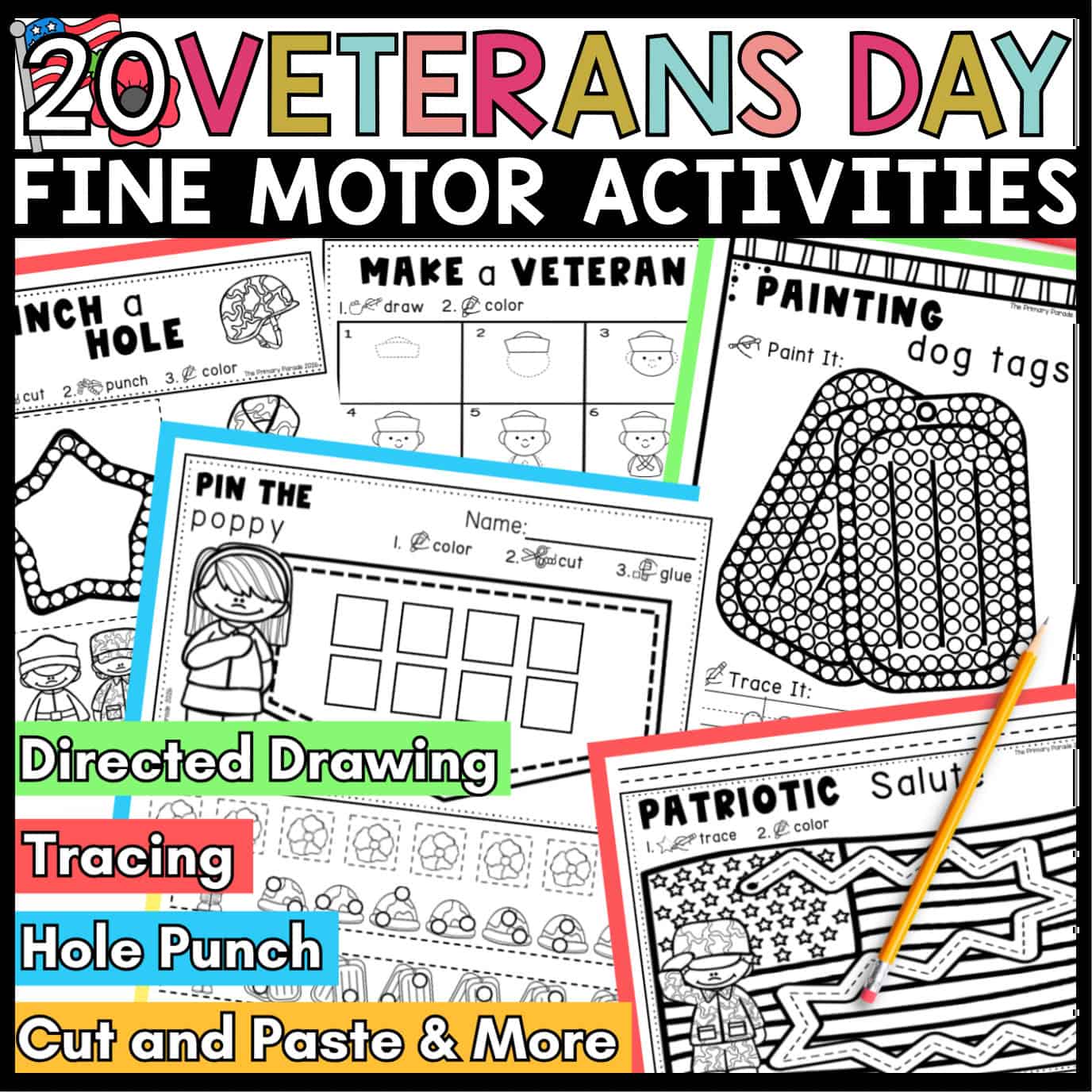
Start with a Simple Veterans Day Conversation
Before introducing the activities, talk about why your class is learning about Veterans Day. Explain that November 11 is a day to honor and thank those who served in the United States Armed Forces. Keep your classroom explanation brief and use language your students understand.
You might say, “A veteran is someone who has served in the military. On Veterans Day, we thank veterans for their service.” Share a picture book or invite children to help you think of a kind way to say thank you. The fine motor pages can follow that conversation as they give students hands-on practice with a holiday theme.
For picture book suggestions and more ways to introduce the holiday, visit my Veterans Day ideas and activities for preschoolers.
Veterans Day Tracing Activities
Start with the Trace the Lines page to practice following different paths. Invite students to trace a line with a finger before picking up a crayon or pencil. Model where to begin and how to slow down at each turn. Children can work on a small section at a time instead of finishing every line in one sitting.
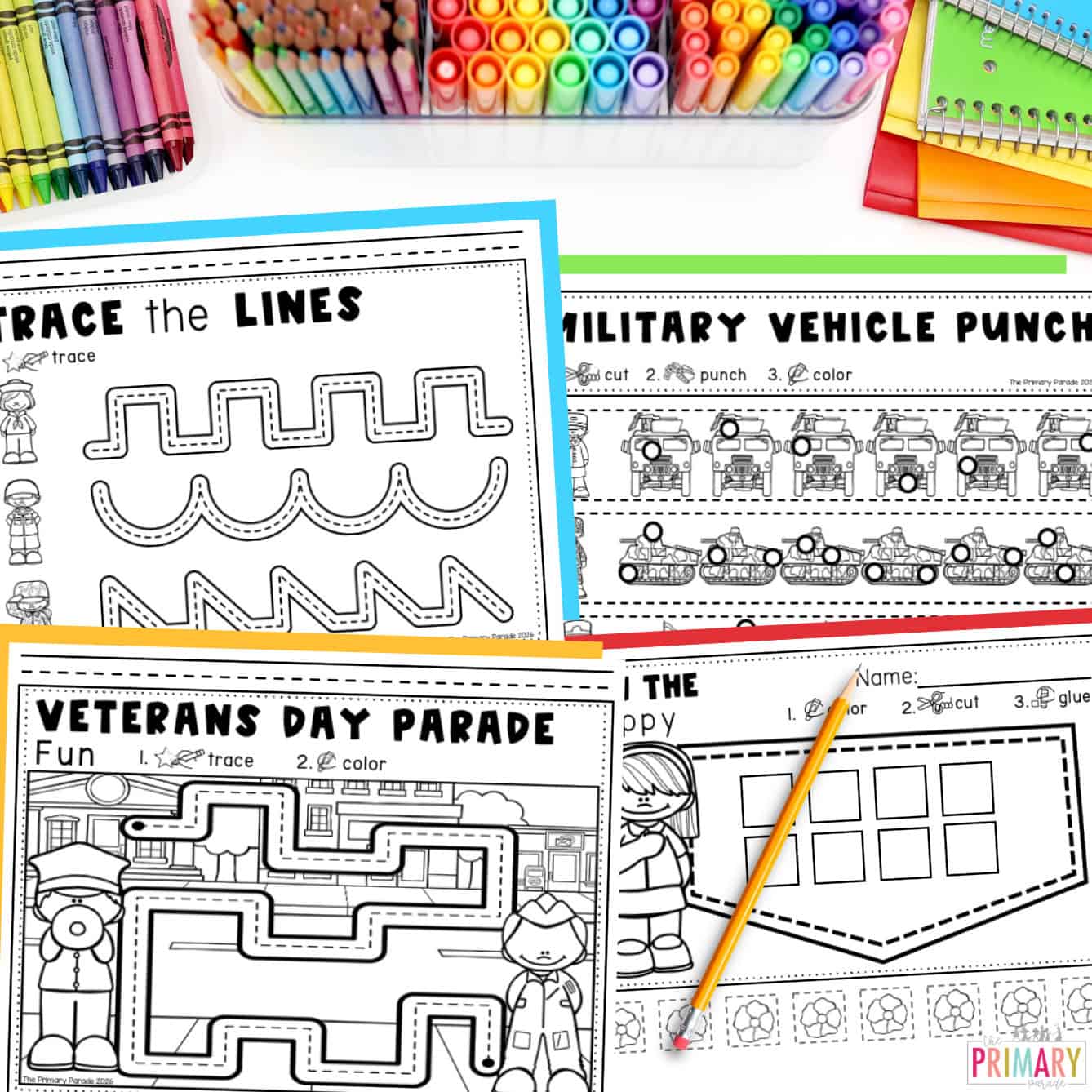
The Veterans Day Parade and Patriotic Salute pages offer another tracing choice. Students follow a path through the parade scene or around the patriotic star, then color the pictures. I like giving children a clear starting point and inviting them to notice when a path changes direction.
These Veterans Day tracing worksheets fit into a short prewriting station. Choose a path that matches your students’ current skills, and keep the focus on careful movement rather than finishing quickly.
Cut-and-Paste Practice with Pin the Poppy
Pin the Poppy combines coloring, cutting, and gluing on one page. Children color the pieces, cut them apart, and glue them into the spaces on the worksheet. Demonstrate each step before students begin so they know which materials to use first.
For children who are just beginning to use scissors, cut the page into manageable strips before the activity. Students can practice snipping apart a smaller section. Children who are ready for more can cut out the pieces themselves and check their placement before gluing.
This is an easy choice for a teacher-led Veterans Day cut-and-paste station. Place a finished sample nearby to show the task, then let children make their own coloring choices.
Try Veterans Day Hole-Punch Activities
The military vehicle strips and shape hole-punch pages give students another classroom tool to explore. Model how to hold the paper steady, line up a circle, and press the punch. Start with a short strip and a few circles so children can learn the movement.
Choose a hole punch your students can comfortably operate and offer help as needed. Keep a small tray beneath the work to collect the paper circles. Showing children how to empty the punch and tidy the station can become part of your center routine.
Add Painting and Directed Drawing
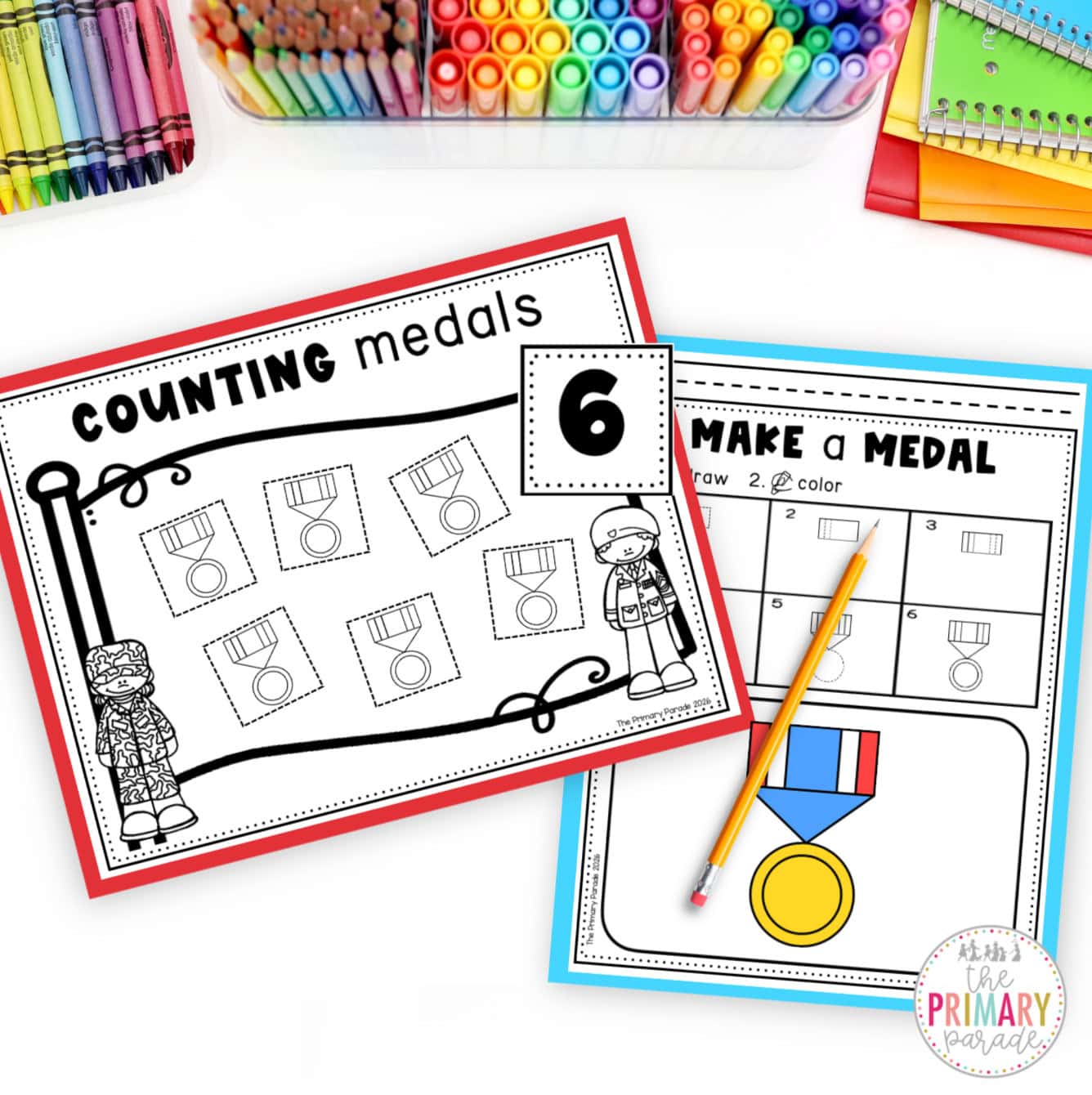
The dog tag painting page gives children a chance to work on small marks inside the printed circles. Offer a small amount of washable paint and a cotton swab for this station. Model making a gentle dot, lifting the swab, and moving to the next space.
For Veterans Day directed drawing, try Make a Medal or Make a Veteran. Introduce one drawing step at a time and give students time to look at the example before drawing. Point out the shapes and lines they can see in each step.
The drawings do not need to look identical. Encourage children to notice what they have added and decide which detail comes next. After drawing, students can color their pictures and share them with a partner.
Combine Counting and Fine Motor Practice
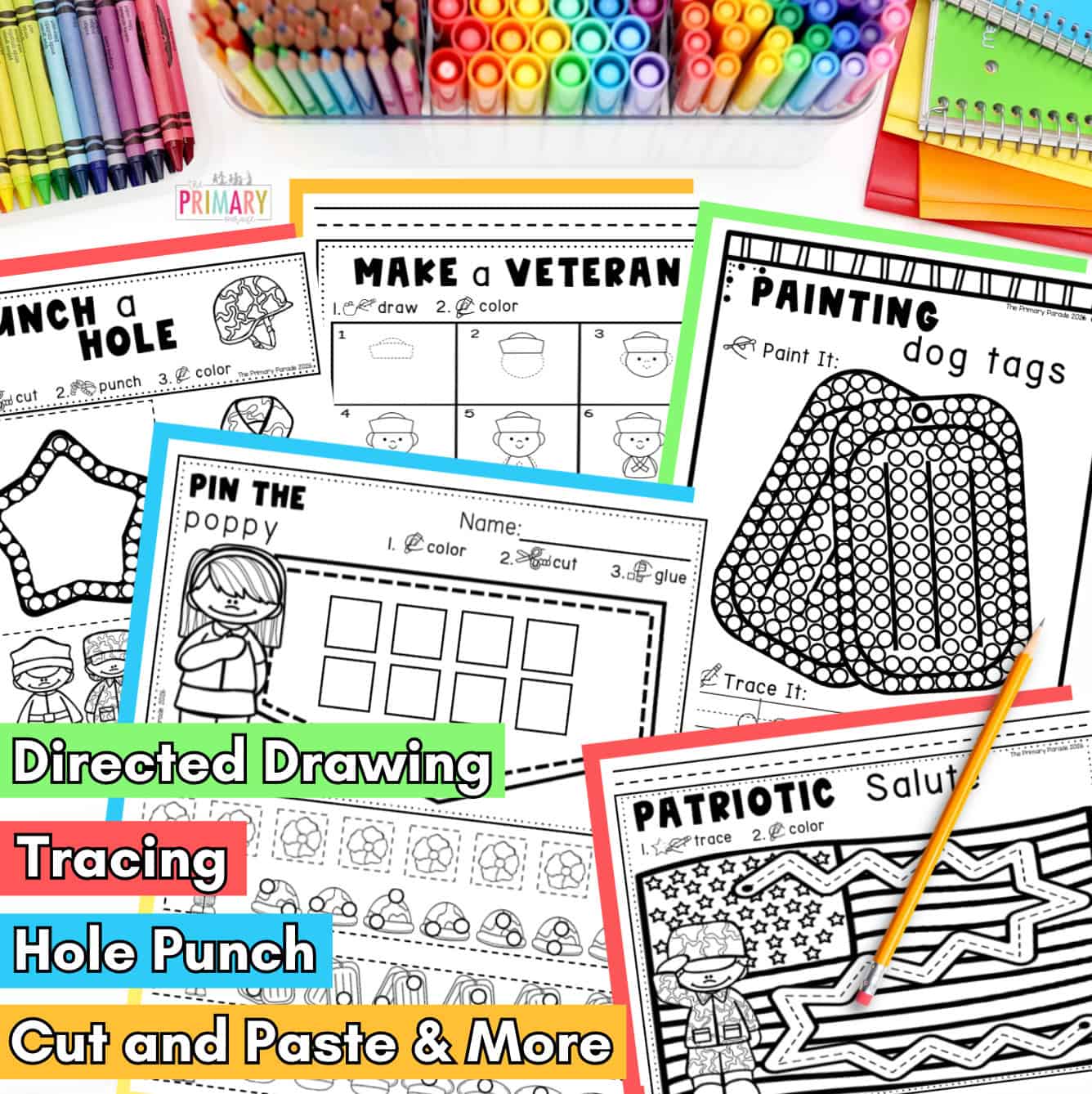
The Counting Medals activity brings a math connection to the pack. Point to the numeral together, then invite students to touch and count each medal. Pause to check that each picture receives one number word.
Use the page in a small group when you want to hear how students count. Children can point, say the total, and explain how they checked their work. Pair it with the medal directed drawing page for a station that includes both counting and creating.
Set Up November Fine Motor Centers
You do not need to put out all 20 activities at once. Begin with two or three choices that use tools your students already know. For example, offer a tracing tray, a cut-and-paste station, and a teacher-led hole-punch activity. Add painting or directed drawing after you have modeled the routine.
Gather Supplies Before Center Time
Print your selected pages and gather pencils or crayons, child-safe scissors, glue, a hole punch, and painting supplies as needed. Keep each activity’s materials together in a tray. Introduce the task and show students where finished work and leftover supplies belong.
Adjust the Activities for Your Learners
Preschoolers may benefit from shorter tracing sections, paper strips prepared by an adult, and help using a hole punch. Kindergarten students who are ready can follow more of the pictured directions independently. Offer support according to each child’s experience with the tools.
For another November station, explore my November writing centers for kindergarten. You can also find more seasonal planning ideas in my November preschool themes.
Get the Veterans Day Fine Motor Printables
Ready to plan your stations? Find the complete set of 20 Veterans Day fine motor activities in my shop. Learning Club and All Access members can visit the Veterans Day Fine Motor Activities resource page to access the pack through their membership.
Which activity would your students want to try first: hole punching, tracing, painting, or directed drawing?


